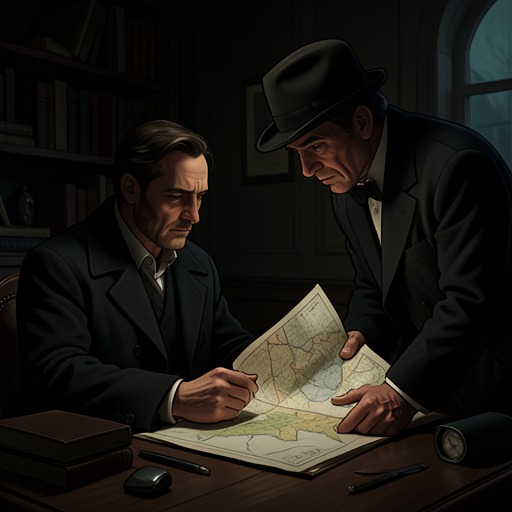
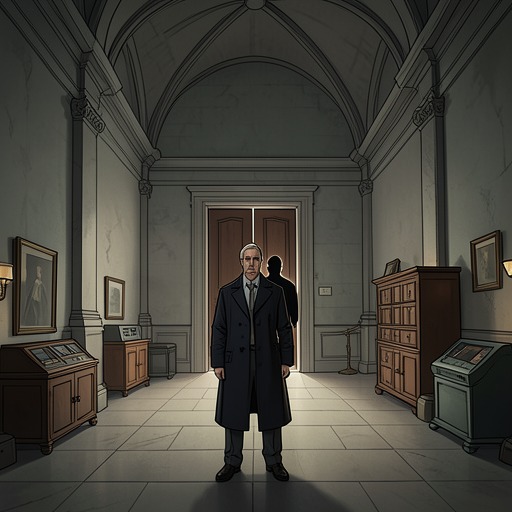
Sir Charles Baskerville
The Hound of the BaskervillesSir Charles Baskerville, the late baronet of Baskerville Hall, is the victim at the center of the novel’s mystery. His death appears at first to belong to the family’s old legend of a supernatural hound; Sherlock Holmes ultimately reconstructs it as a carefully arranged murder. Sir Charles’s trust in Stapleton, his knowledge of the legend, and his vulnerable heart make him the intended target, while the appointment that brought him to the gate supplies the final opportunity.
Identity and place in the family
Sir Charles is the older Baskerville whose death leaves the family estate to be inherited by Sir Henry Baskerville. The prospect of that inheritance gives his murder its larger consequence: the attack is not only a private crime but the first stage of a plan to obtain the estate. Sir Henry’s determination to go to the home of his own people despite the possibility of danger shows how Sir Charles’s death has placed the next generation under threat as well.
At Baskerville Hall, Sir Charles had led a retired life. The household was small enough that Eliza Barrymore and her husband had been able to attend to his needs, and both had become deeply attached to him. Eliza later says that his death made the surroundings painful and left them unable to feel at ease in the house. Their grief provides a measure of his place in the household, even as their private conduct after his death initially makes them objects of suspicion.
Sir Charles was also generous. His kindness had given the Barrymores the means to establish themselves in a business, and he had acted as a benefactor to Laura Lyons. His association with Stapleton included confidence and friendship: he told Stapleton about the family hound, not knowing that this disclosure would help prepare the way for his own death. These relationships connect his ordinary habits of trust and charity to the mechanisms of the crime.
The appointment at the gate
The first important explanation of Sir Charles’s final movements comes from Barrymore, who knows why the baronet was waiting at the gate at the hour he died, though he does not know how the death occurred. Sir Charles had gone there to meet a woman. This clue changes the meaning of the scene: the meeting was not a random excursion or simply an encounter with the legendary beast, but an appointment whose purpose had been concealed from the household and investigators.
Dr. Watson later establishes that Laura Lyons had written to Sir Charles and arranged to meet him at the place and time of his death. That discovery links the mysterious woman to the gate, but it does not by itself establish what happened there. In Holmes’s subsequent reconstruction, Stapleton had used his influence over Laura to bring about the appointment, then prevented her from attending. Sir Charles therefore waited for someone who had been induced to summon him but would not arrive.
How Stapleton exploited his trust
Holmes explains that Stapleton knew Sir Charles had a weak heart, information he had obtained from Dr. Mortimer. He also knew that Sir Charles was superstitious and took the family hound legend seriously. Sir Charles’s disclosure of the story gave Stapleton a way to turn those vulnerabilities into instruments of murder: a death caused by terror could appear to confirm the legend while obscuring the human agent behind it.
Stapleton acquired a large, savage dog in London and brought it to Devonshire, taking care not to attract attention on the journey. His earlier excursions into Grimpen Mire had taught him how to reach a secluded hiding place, where he kept the animal until he had an opportunity to use it. He had first hoped that Beryl Stapleton would lure Sir Charles out at night, but she refused to help, despite pressure from her husband. The plan stalled until Stapleton found another route through Laura Lyons and the appointment at the gate.
On the evening of the murder, Stapleton collected the dog, treated it with a substance that made its appearance more frightening, and brought it to the gate where he expected Sir Charles to be waiting. The animal pursued the baronet down Yew Alley. Holmes concludes that Sir Charles died of heart failure brought on by terror. Because the dog kept to the grassy edge while Sir Charles ran along the path, the tracks did not straightforwardly reveal the animal’s part in the death. The paw print noticed by Dr. Mortimer became one of the few signs connecting the death to a hound.
Death and the evidence left behind
The circumstances of Sir Charles’s death allowed the family legend to dominate the first interpretation of the case. Stapleton called the dog away and returned it to its hiding place in Grimpen Mire; the remaining mystery alarmed the surrounding countryside and eventually brought the case to Sherlock Holmes’s attention. The apparent supernatural explanation was therefore also practical cover: it encouraged fear while making it difficult to prove the real murderer’s responsibility.
The delayed revelations distinguish what the investigators first know from what Holmes later establishes. Barrymore can identify the purpose of Sir Charles’s visit to the gate, and Watson can connect the appointment to Laura Lyons. Holmes supplies the missing causal chain: Stapleton exploited the appointment, Sir Charles’s heart condition, his belief in the legend, and the hidden dog. Both Laura and Beryl suspect Stapleton for different reasons, but Holmes observes that neither initially has the means to expose him. The murder’s apparent strangeness protects its perpetrator as effectively as the secrecy surrounding the appointment.
Narrative significance
Sir Charles is absent from the action, yet the consequences of his choices and death shape the investigation. His kindness creates ties to the Barrymores and Laura Lyons; his friendship with Stapleton gives the murderer access and confidence; and his willingness to share the family story supplies the very legend used against him. The case gradually converts these apparently ordinary acts into evidence of how the crime was made possible.
His death also establishes the pattern that threatens Sir Henry: an inherited family story is made to serve a calculated human purpose. Holmes withholds the truth about the hound from Sir Henry after Selden’s death, allowing him to believe that the fugitive’s death accounts for the danger and leaving him unaware of the threat awaiting him. Sir Charles’s murder is thus both the outcome of Stapleton’s first successful scheme and the warning that the danger to the Baskerville line has not ended.